
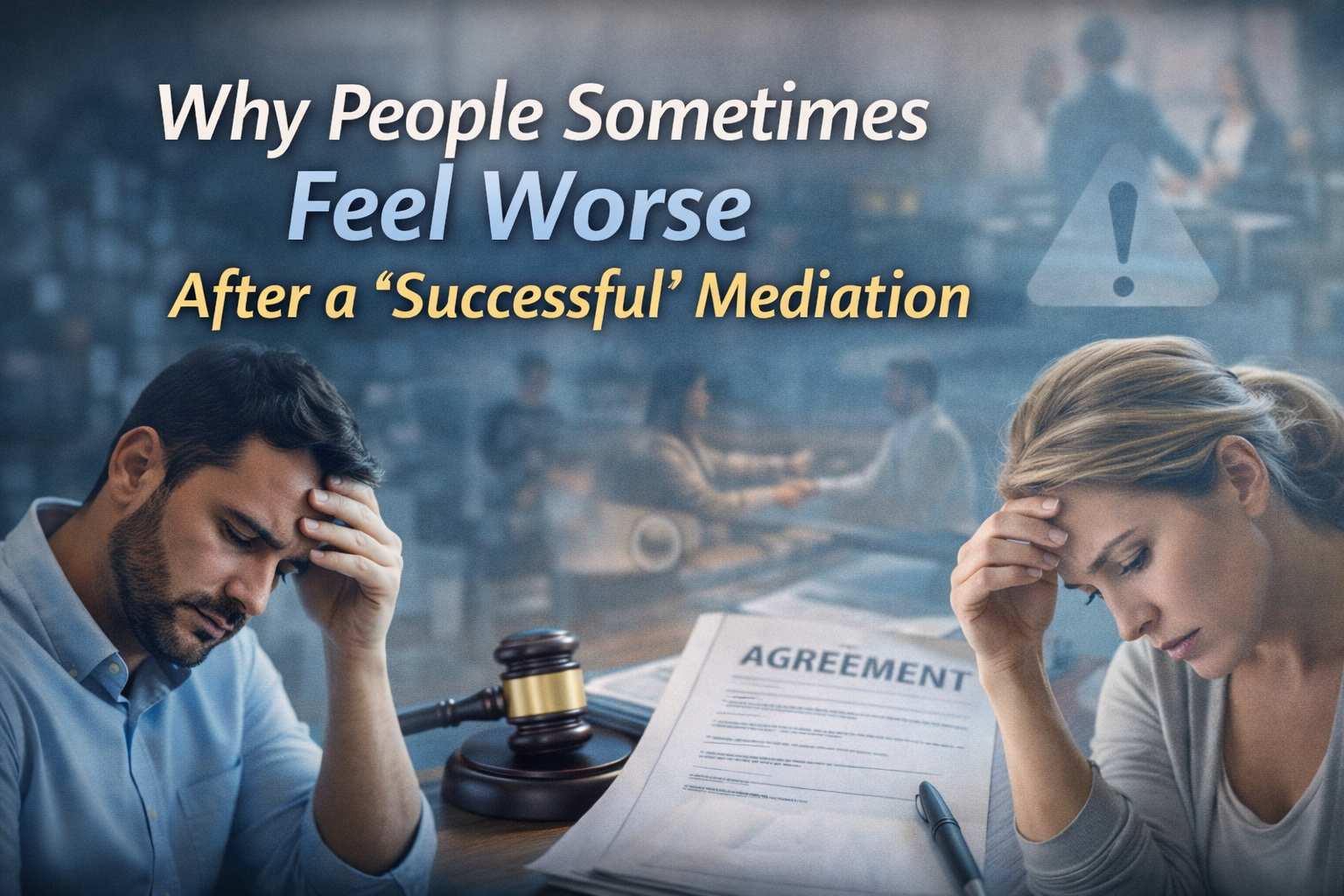
People are often surprised by how they feel after mediation.
They expect relief. Or closure. Or at least a sense that something heavy has finally been put down. Instead, what sometimes arrives is a strange mix of exhaustion, flatness, doubt, or sadness — even when an agreement was reached and the process itself felt respectful and fair.
That reaction can be unsettling. It can also lead people to quietly question whether the mediation really worked, or whether they agreed to something they shouldn’t have.
In most cases, that discomfort isn’t a sign that the mediation failed. It’s a sign that something significant has just happened, and the emotional system hasn’t caught up yet.
If you’re curious how format changes the room dynamics, I’ve written a practical explainer on what changes in online mediation (and what doesn’t).
Mediation is often described in outcome terms. An agreement was reached. The matter resolved. Documents signed. From the outside, it looks neat and contained. From the inside, it rarely feels that way. Mediation asks people to concentrate intensely, manage emotion, weigh risks, and make decisions under pressure — often about things that matter deeply to them. When that process ends, the body and mind don’t always respond with immediate relief. Sometimes they respond with a kind of emotional comedown.
There’s also a quieter reason this reaction occurs. Mediation is not designed to declare winners or validate narratives. It doesn’t determine who was right or wrong, or who hurt whom more. Even when an agreement feels sensible and workable, it can leave important emotional questions unanswered. For people who hoped that the process would bring acknowledgment, understanding, or vindication, the absence of those things can feel like a loss — even if the practical outcome is acceptable.
Agreement itself can also carry grief. Many mediated outcomes involve letting go of something: a version of the future that won’t happen, a hope that things might return to how they were, or a belief that holding on a little longer might have produced a different result. Accepting limits, even reasonable ones, can be emotionally costly. That cost doesn’t mean the agreement was wrong. It simply means that compromise is not emotionally neutral.
Another source of discomfort is uncertainty. Mediation outcomes are made without guarantees. People leave knowing that the future still depends on behaviour, trust, and circumstances beyond their control. Once the structure of the mediation room disappears, that uncertainty can feel more exposed. Second-guessing often shows up at this point — not because the decision was careless, but because it mattered.
There’s also a contrast effect that’s easy to underestimate. Mediation takes place in a highly structured environment. There are clear rules, a defined process, and a neutral person holding the space. When it ends, people return to everyday life, where those supports vanish abruptly. The shift can feel jarring, particularly if the mediation was the first time the issues had been discussed calmly or safely.
For most people, these reactions settle with time. As the agreement begins to operate in real life, confidence often grows and emotional intensity fades. Feeling unsettled in the days immediately after mediation is usually a normal response to having done something difficult and consequential.
That said, there are moments when the reaction is worth paying closer attention to. If someone feels pressured into agreement, confused about what they agreed to, or unsafe once the process ends, those are not emotions to push aside. A sound mediation process should allow space to pause, seek advice, and avoid rushed decisions — precisely because outcomes are meant to be lived with, not just reached.
One of the quieter truths about mediation is that success doesn’t always feel good straight away. Sometimes it feels heavy. Sometimes it feels unresolved in ways the process was never meant to resolve. That doesn’t diminish the value of mediation. It simply reflects the reality that practical resolution and emotional resolution don’t always arrive at the same time.
Understanding that difference can make the aftermath of mediation easier to sit with — and can help people judge the process by what it is designed to do, rather than what they hoped it might fix.
—
If you’re considering mediation and want to talk through what a realistic outcome might feel like — not just what it might achieve on paper — you can get in touch to discuss process options and expectations.